Chamonix Welcome Collective - France
A small collective building pathways for refugee teens to access their community and mountains.
how we accompany (cwc)
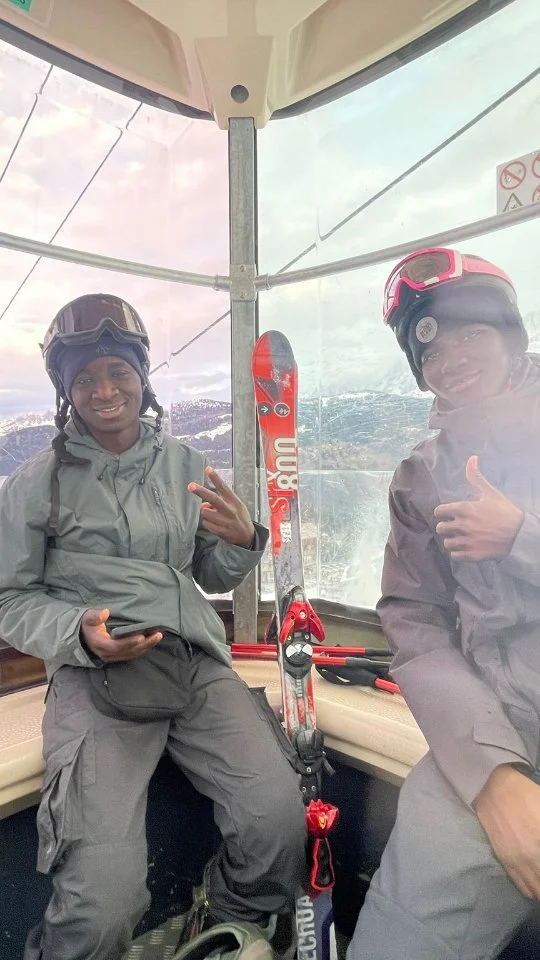
Based on experience, MBB commits 2 years to accompany programs, with a goal of increasing visibility, impact, and autonomy. In this case, as MBB’s founder, I (Tiffany Hensley) invest time physically, in person, with this project as a coordinator (since I live below the Mont Blanc Massif myself). As it’s a small volunteer-run project, we all wear all the hats - collecting donations, organizing activities, securing funding, and creating public visibility around calls to action. My main goal, from the beginning, was to create a pathway for the youths to access the mountains even after they turn 18 and leave the center - which we did, by the end of 2025.
Who is Chamonix welcome collective?
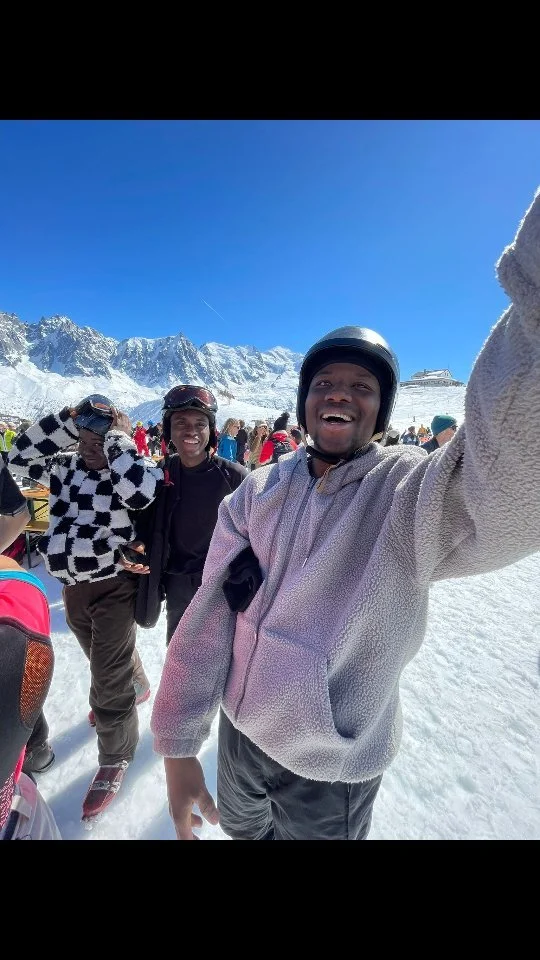
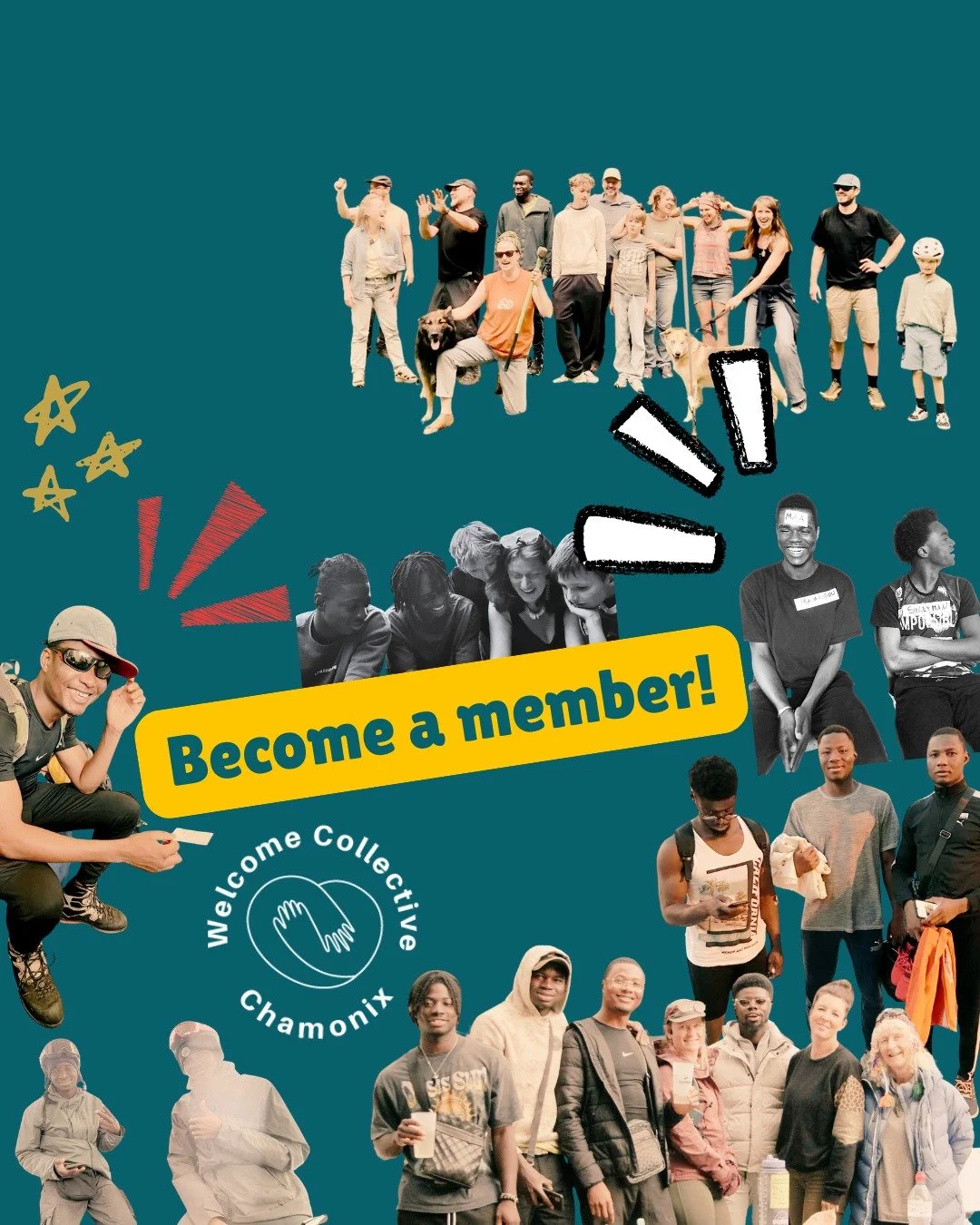
CWC was founded by two amazing women: Kate and Claire. They responded to the arrival of Ukranian refugees, and after the refugees left Chamonix they pivoted to partner with a newly-arrived social home 10 minutes away, where 34 migrant minors ages 14-18 (mostly from West Africa) arrived. They started small, collecting donations, Christmas presents, and organizing climbing sessions. As CWC became more visible, their mission turned to integration: the youths could benefit integrating in the wealthiest community of the French Alps, whether through sports or cultural activities. Today, the administrative team is still 100% vounteer-run and has an annual budget of 15,000 euros. They sponsor weekly activities throughout the year with 15-20 teens at a time, including swimming, skiing, climbing, fitness, and running.
Who are these refugee teens (unacompanied migrant youth)?
In developed countries, they’re called “Unaccompanied Migrant Minors” and defined as migrant minors who enter a country without family.
Many were displaced from countries impacted by war or global warming. Many travel over 6,000km, either crossing the Med Sea, or going around. Over 95% are male. Once they’re taken off the boat or found on the street, they’re registered into youth homes, where, by 16 years old, they are funneled into hard-working and often exploited contracts. They face the pressures of adapting to a new world alone, sending money to their distant families. Finally, at 18 years old, they take the terrifying step out of the home, and into a world where they face blatant racism, exploitation at work, and a fraught French visa renewal system - alone, on their own.
how mbb is building access
Every project we have worked with in the last 10 years has a unique situation - and therefore, a unique solution.
I learned a lot from the founders of Mexico’s “Escalando Fronteras” program, where at-risk youth lived in a barrio that faced real violence, crime, addiction, perpetuated by inner-city poverty, a narco culture, and indigenous discrimination. It’s a place where the law looked away, or made it worse; kids dropped out of school at 10 to work exploited hard labor jobs, without security. EF’s solution was long-term, interdisciplinary, and neighborhood-wide. Their rehab climbing program with teenagers became a social work program that provided developmental intervention at a much earlier age, changing the course of the barrio’s future.
In France, there are no barrios. The teens study, work, and speak with formal politeness in order to keep their visas renewed - which may be as often as every three months! They don’t even drink alcohol, smoke, or eat pork, because most are Muslum.
So what’s the problem?
At 18, they are suddenly on their own. Still teenagers, still facing racism. Still exhausted from carrying the trauma of separation from their families, and the hardship of their voyage. At this critical moment when they start to fly on their own, a supportive community creates an updraft to shoot over these barriers. Without that community, or someone to call when things get tough, social isolation takes it’s toll. These teens are highly vulnerable to abusive work contracts and racism, which can wear a person to emotional exhaustion.
I’ve seen their potential: healthy, motivated, with a foot in two worlds, using their education and resources to not just wire money home. They may become an electrician to install solar panels in their village, where the electricity was often cut for days. Another may realize he can pay his sisters’ education.
Here’s the solutions we’ve developed so far:
Rebuilding physically and mentally: a long-term, weekly group fitness program lead by a mentor they can identify with. This helps rebuild their emotional and physical injuries to have a solid base of health and self-esteem. This also created an inclusive space where they feel safe to go on their own.
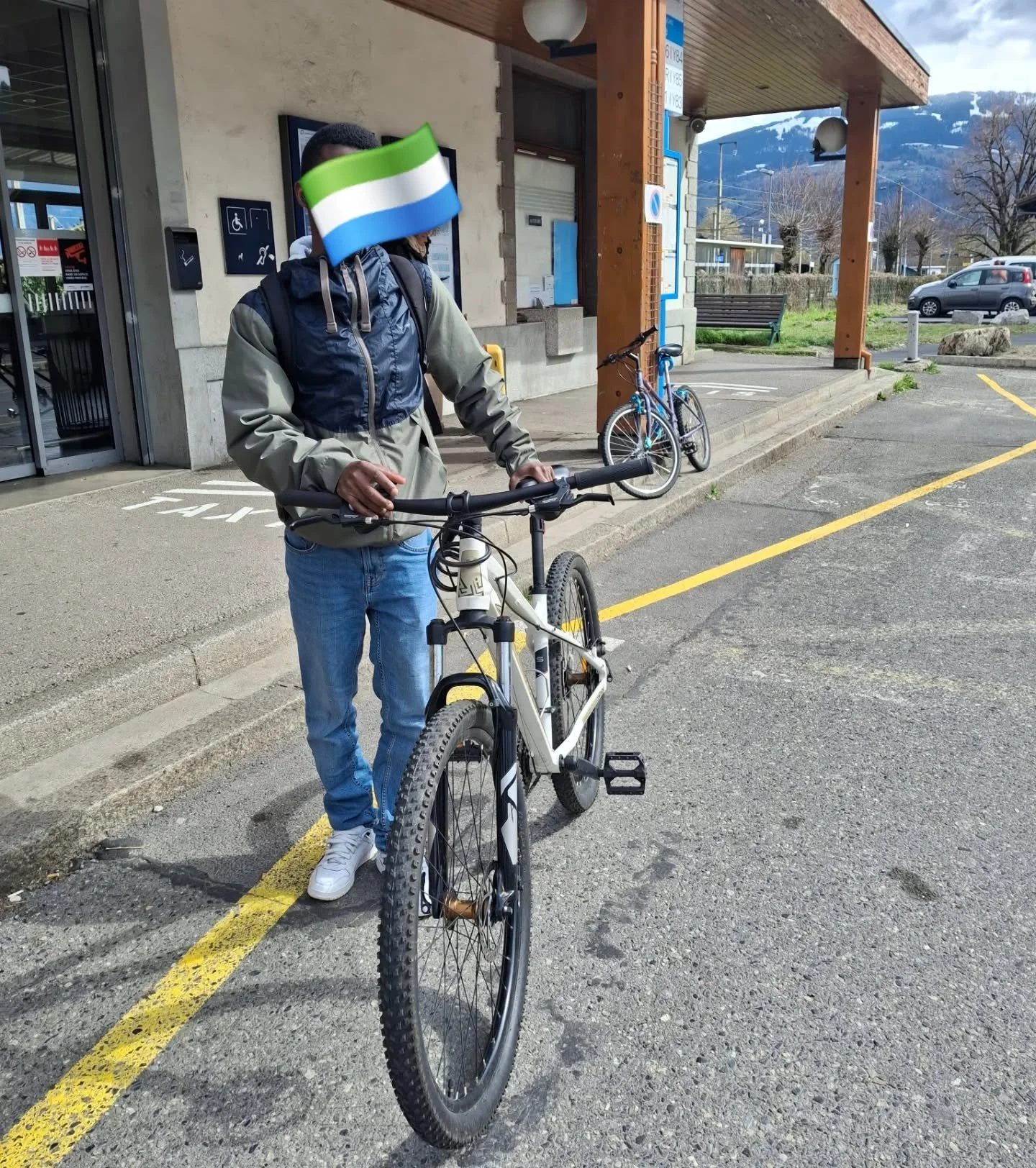
Real mountain access: annual student lift passes, donated equipment, and introductory group courses. we created sustaible mountain access so that at 18 these teens can continue to access the outdoors together all year long
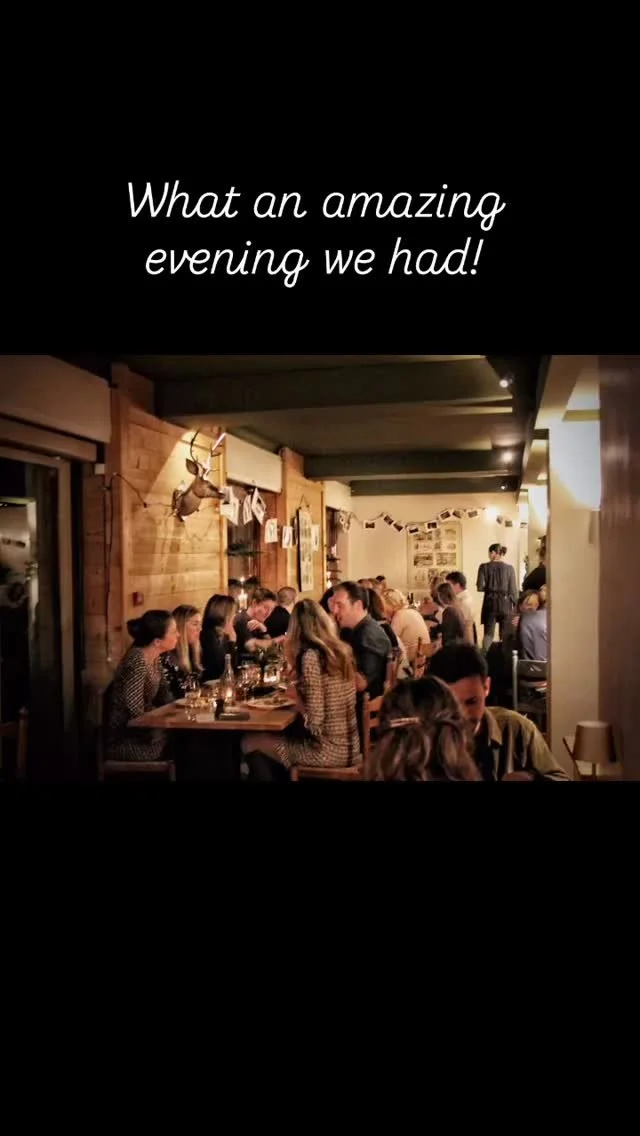
Community connection: open community events build trust and visiblity between the teenagers and potential host families
We’ve engaged with over 50 youths, a dozen educators who provide for them, and three homes that work in the valley. We observed what worked, and what didn’t.
In 2026, we’ll be focused on getting funding for these programs to run regularly for a year in advance, rather than raising funds every season.
If you would like to contribute, learn more, or volunteer, just reach out to me, Tiff.
WhatsApp: +33 7 84 98 91 82